💪
Kodebody
HomeFAQPrivacyTerms

AI Body Analysis

Body Compositionfrom a Photo

Estimate weight, body fat percentage, and muscle mass using only your smartphone camera and receive personalized health advice.

View Methodology
Kodebody body composition scan results showing body fat percentage and skeletal muscle mass

How accurate is Kodebody?

Kodebody provides photo-based body composition estimates. Unlike bioelectrical impedance (BIA) or DEXA scanning, which measure tissue properties directly, Kodebody's model infers body composition from visual silhouette data.

Expect day-to-day variation of ±1–3% in PBF readings due to hydration, lighting, and clothing differences. For this reason, Kodebody is designed around weekly trend lines rather than daily absolute values — the direction and rate of change over 4–12 weeks is where the signal lives.

Kodebody is not a medical device and results should not be used for clinical decisions.

Features

Key Features

View four core features at a glance, and check the mapped in-app screen for each.

One-photo analysis

AI Body Composition Analysis

Analyze weight, skeletal muscle mass, body fat percentage, and BMI from photo upload. Check visceral fat level and basal metabolic rate too.

Weight·Muscle·FatPhoto estimate
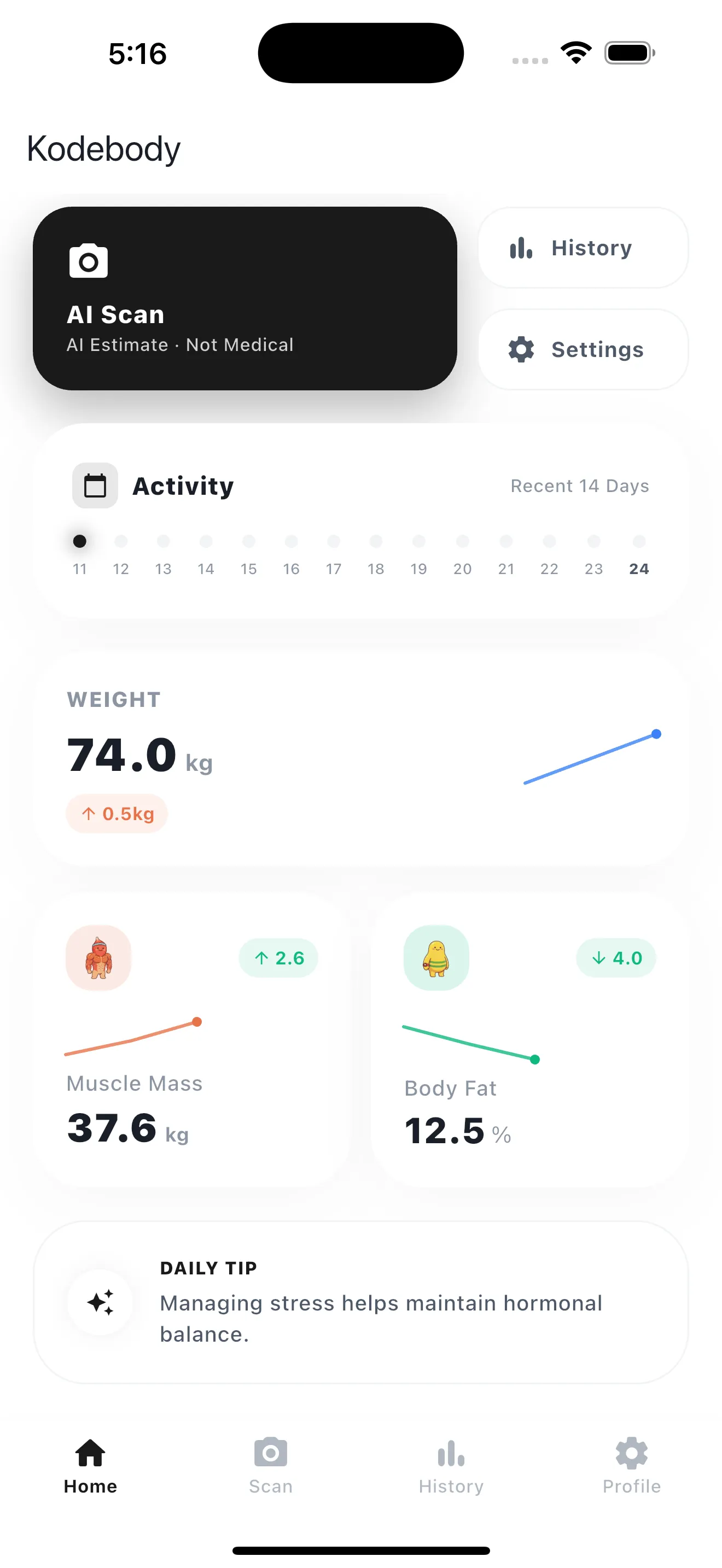
Kodebody body composition scan results showing body fat percentage and skeletal muscle mass

Personalized advice

Personalized Health Advice

Get detailed body analysis reports from AI with personalized workout recommendations and carb/protein/fat ratio guides.
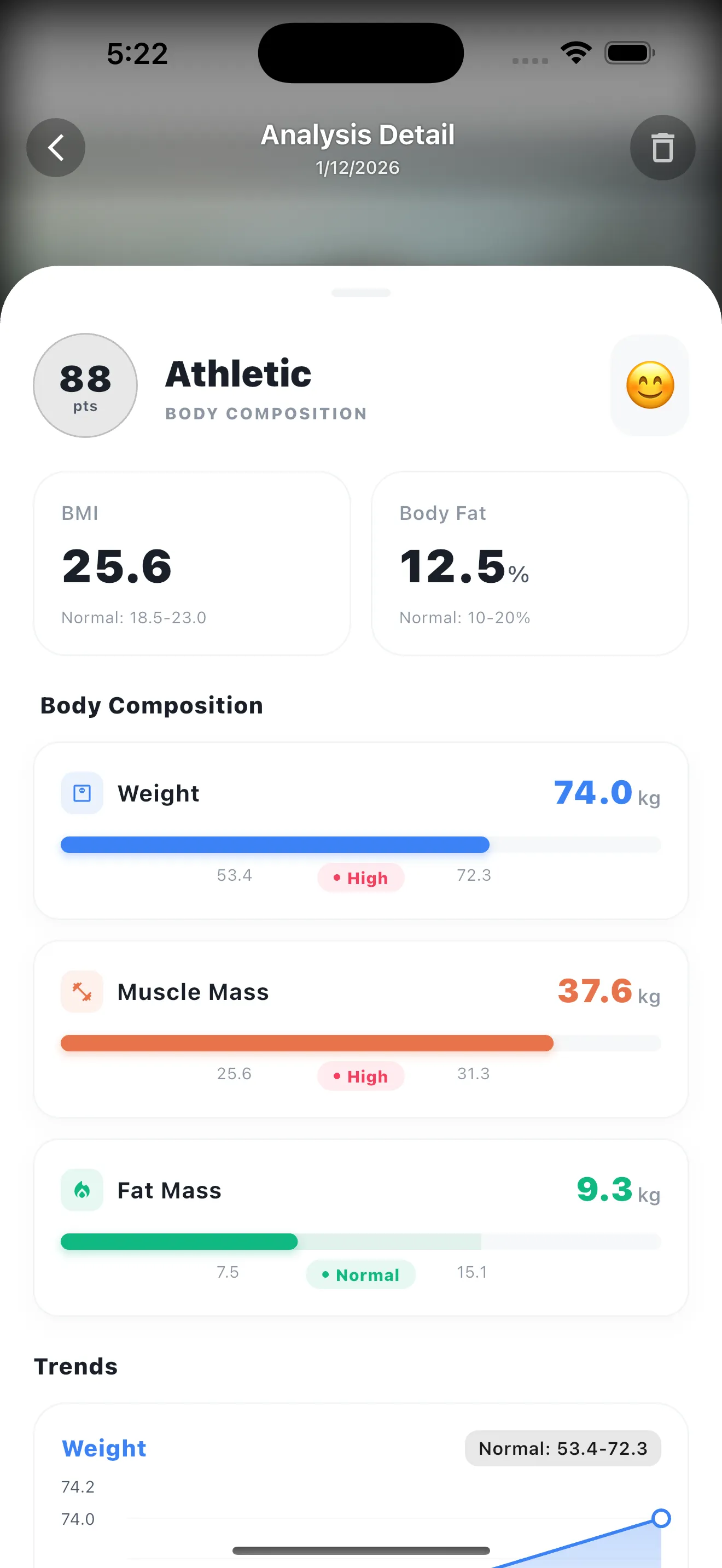
AI insightAction plan
Kodebody 12-week body composition trend chart tracking PBF and skeletal muscle mass

History & trend graph

Record & Trend Analysis

Measurement records are automatically saved, and you can track progress with weight/muscle/body fat change graphs.
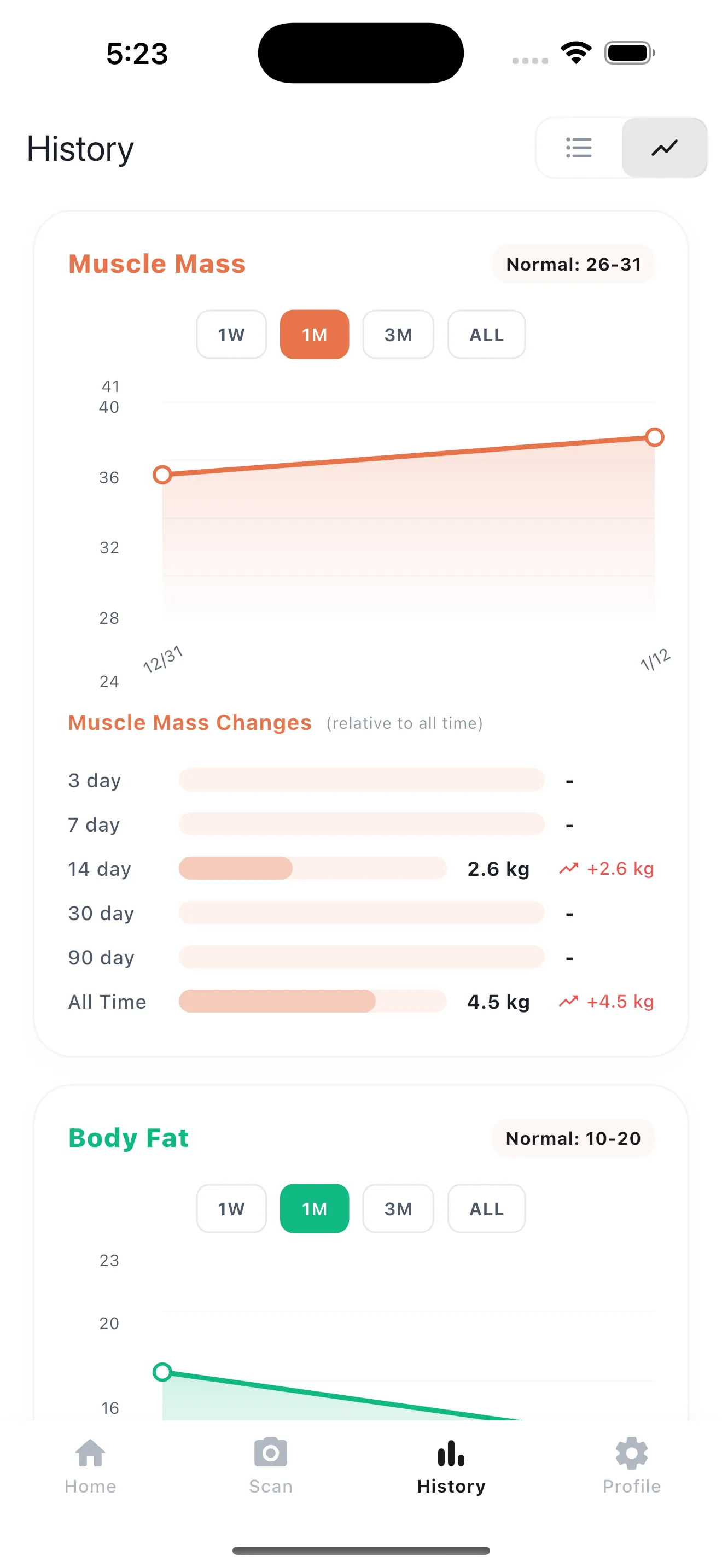
Weekly trendAuto history
Kodebody workout history — weekly volume and personal records dashboard

Body type analysis

Body Type Analysis

Check AI-analyzed body type and overall score, and set target weight and body fat percentage goals.
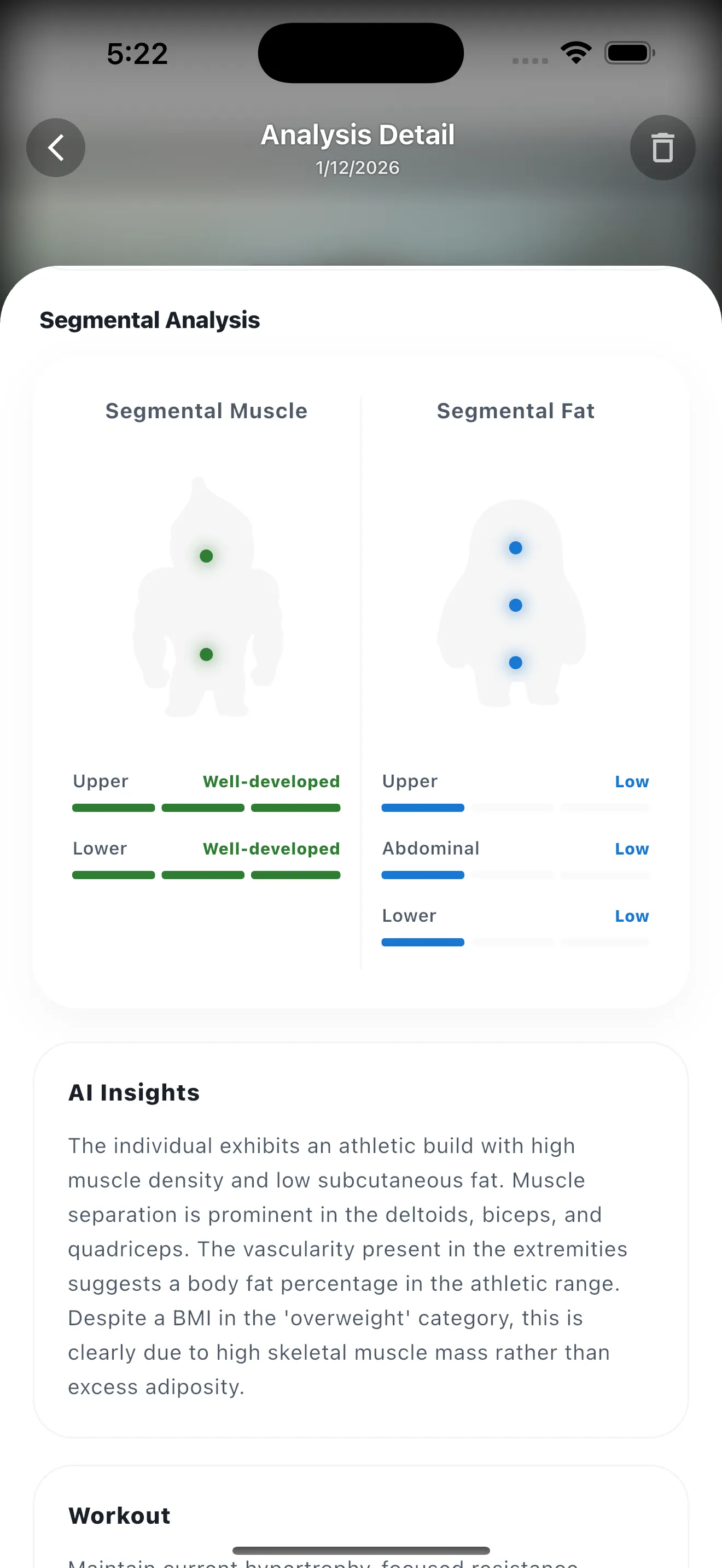
Body type scoreGoal setup
Kodebody workout session logging — sets, reps, weight, rest timer

How it works

How to use Kodebody

Five steps to estimate body composition from a single photo.

  1. 1

    Open the camera

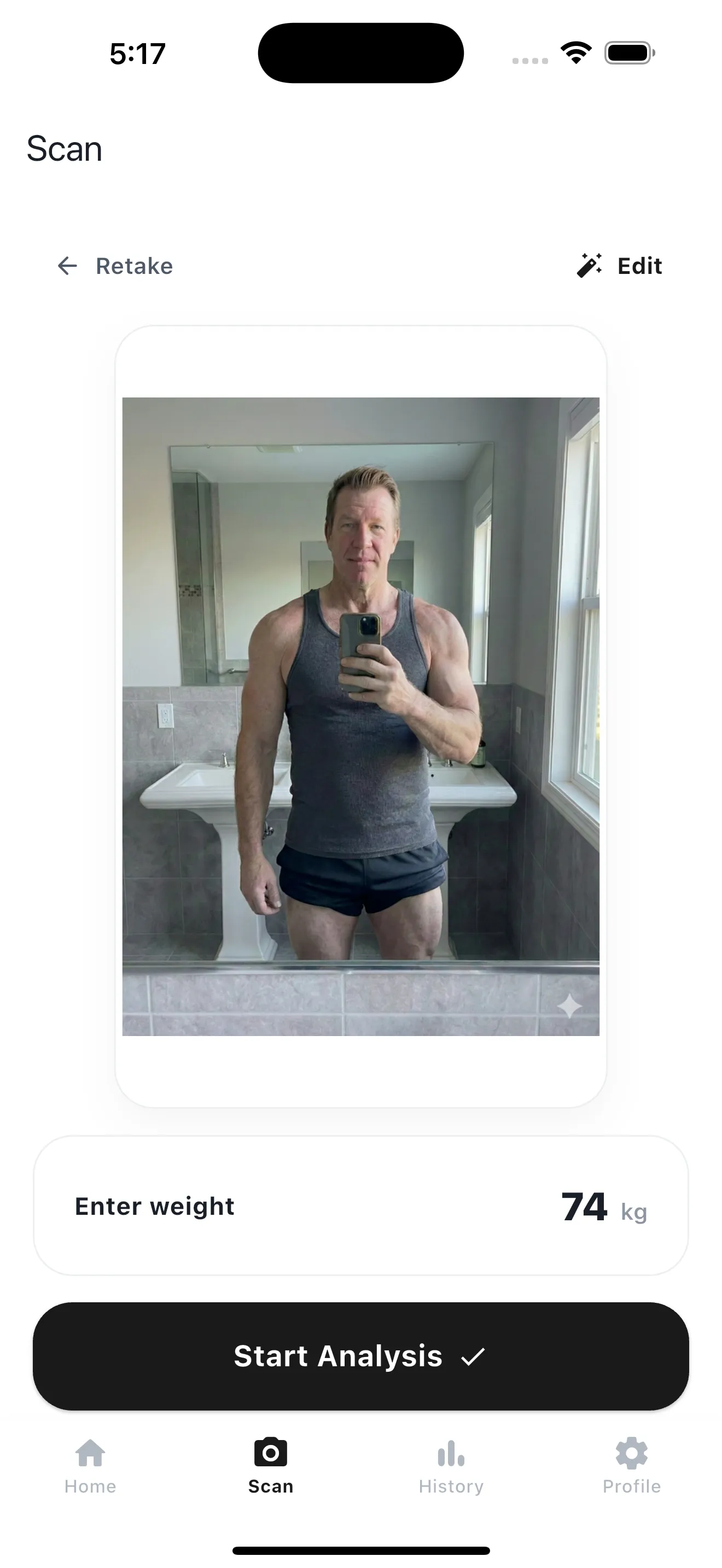
    Open the camera and stand in frame — no special pose, no markers.

  2. 2

    Silhouette detect

    The on-device pipeline detects your silhouette in approximately 4 seconds.

  3. 3

    Signature send

    An anonymized body signature (not your photo) is sent to the analysis model.

  4. 4

    Results

    Estimates for body fat %, skeletal muscle mass, weight delta, and 4-segment balance return in under 10 seconds.

  5. 5

    Save

    Results are saved automatically to your history.

Method comparison

Body composition methods compared

How accuracy, cost, and convenience compare across common methods.

MethodAccuracyCostConvenienceBest For
DEXA ScanClinical-grade$$$ (lab visit)LowMedical baseline
Bioelectrical ImpedanceGood$$ (device)MediumHome use with device
Hydrostatic WeighingClinical-grade$$$$Very lowResearch
Kodebody (photo)Trend-levelFreeHighDaily tracking

Gallery

See Kodebody in Action

Preview the key features of Kodebody.

Kodebody body composition scan results showing body fat percentage and skeletal muscle mass
Kodebody segmental balance view — right arm, left arm, trunk, lower body breakdown
Kodebody 12-week body composition trend chart tracking PBF and skeletal muscle mass
Kodebody workout session logging — sets, reps, weight, rest timer
Kodebody workout history — weekly volume and personal records dashboard

Practical Body-Composition Guides

Read practical guides on onboarding, trend interpretation, and how to combine Kodebody with professional measurements.

FAQ

Frequently Asked Questions

Analyze your body composition with just a photo! AI measures your weight, body fat percentage, and muscle mass with personalized health advice.

Can I check my body fat percentage without a scale?

Yes. Kodebody estimates body fat percentage and skeletal muscle mass from a single photo, with no body-composition scale. It is an estimate, so it can differ from a bioimpedance (BIA) scale or a DEXA scan; it works best for following the trend with regular photos taken at the same time, light and clothing.

How accurate is AI body composition analysis?

Kodebody provides photo-based estimates for tracking trends over time, not clinical-grade measurements. Results are best used to observe the direction and rate of change — not as a replacement for professional devices like DEXA or bioelectrical impedance.

What type of photo gives the best results?

A full-body photo in good lighting, preferably a mirror selfie or a photo taken by someone else. Wear form-fitting clothing so your silhouette is visible. Same time of day, same lighting, and same outfit across sessions produces the cleanest trend data.

Are my photos stored or shared?

Photos are processed over an encrypted channel, never used to train AI models, and never shared with advertisers. You can delete all photos, scans, and workout data from Settings → Data with a single confirmation.

Does Kodebody replace body composition testing equipment?

No. Kodebody is a trend observation tool for personal tracking. It is not a medical device and is not intended to replace clinical assessments such as DEXA scanning or bioelectrical impedance analysis.

What does Kodebody Pro include?

Pro includes unlimited body scans, full scan history beyond the 5-scan free preview, and unlimited workout session history. Free users get a generous monthly scan allowance and full access to the workout logging features.
Glossary

Quick definitions for the key terms Kodebody uses.

PBF (Percent Body Fat)
The proportion of total body weight made up of body fat. Kodebody estimates PBF from a single photo.
SMM (Skeletal Muscle Mass)
The total mass of skeletal muscles you can voluntarily move. Tracking SMM is the cleanest signal of strength training progress.
Segmental balance
An analysis that splits the body into four segments — right arm, left arm, trunk, lower body — to surface left/right and upper/lower imbalances.
Progressive overload
A training principle of gradually increasing weight, sets, or reps over time to drive strength and muscle adaptation.

Photo privacy

Your photos are never stored on our servers after analysis completes. Processing happens over TLS-encrypted channels. Photos are never used to train AI models and never shared with third parties. Delete all data from Settings → Data at any time.

Start your
scan.

Build a sustainable routine by tracking body-composition trends, not just scale noise.