
Find out · · 2 min read
Kodebody: AI Body Composition Analysis from a Single Photo
In this post
Spend enough time dieting and a weird moment comes. You've lost weight but your body doesn't look right, or the scale hasn't moved but your shape is actually better. The real question is always "am I even doing this right?"
Kodebody was built to answer that question. Not through one perfect measurement, but by helping you make less shaky decisions every week.
The Problem This App Tackles
Most diet failures don't come from lack of information — they come from decision fatigue.
Your mood swings with a single weigh-in. When numbers fluctuate, you overhaul your entire plan. You log data but it never connects to action. Kodebody shows weight, body fat percentage, and muscle mass in one flow so you catch these traps early. It's about seeing patterns and trends, not isolated numbers.
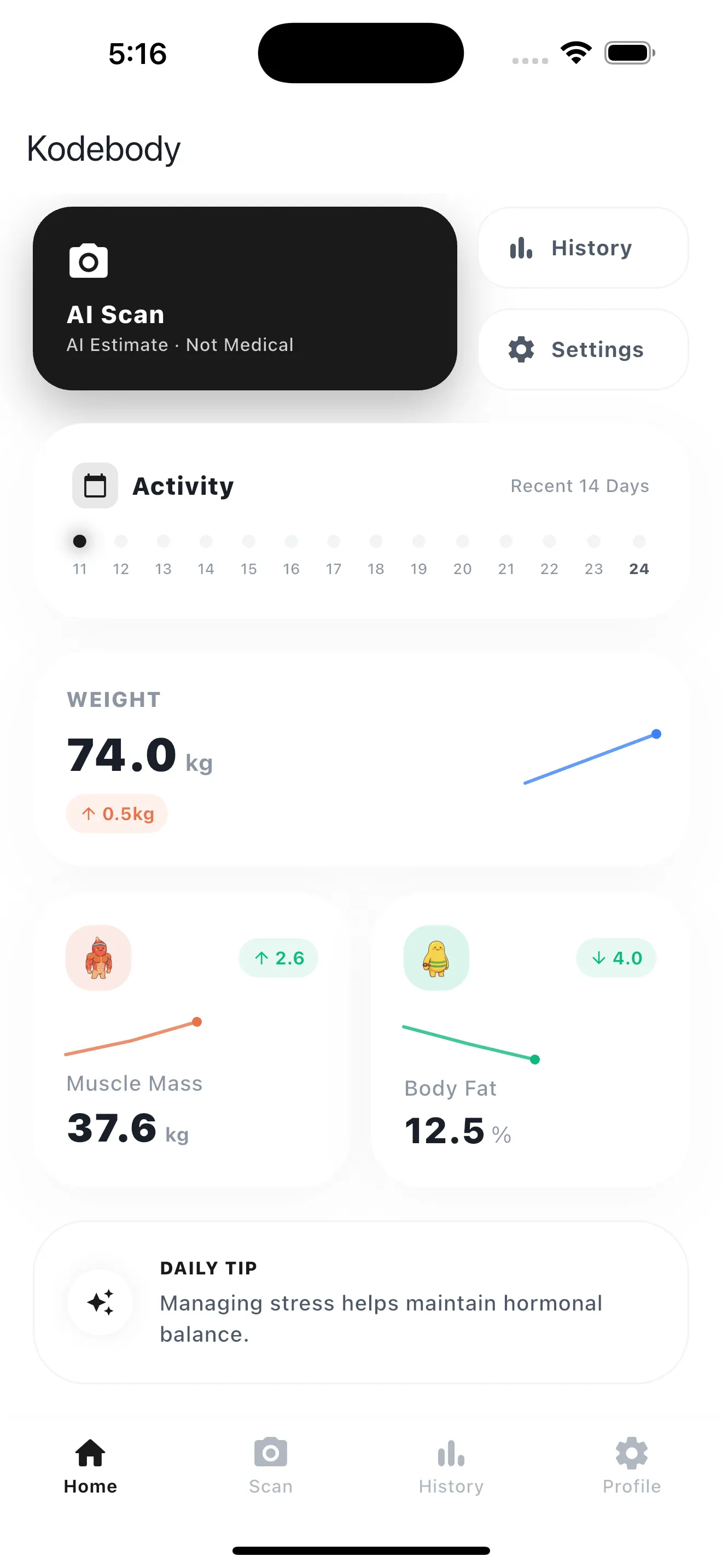 What matters isn't feature count — it's a repeatable workflow.
Who This Is Really For
People who can't get to an InBody machine often. People whose mental state gets wrecked by a single number on the scale. People who can't stick with complicated tracking apps. People who want to turn dieting from an event into a habit. If any of these apply, Kodebody's strengths will hit different.
Common Misconceptions
"It's AI, so it must be perfectly accurate" — No. Kodebody is not a medical diagnostic tool. Trusting absolute values blindly actually clouds your judgment.
"Then what's the point?" — The value isn't in absolute numbers but in trends. When you measure repeatedly under the same conditions, the data becomes genuinely useful for decision-making.
Try This for the First 14 Days
Trying to be perfect from day one is how you burn out fast. Just follow these.
- Measure 2-3 times per week
- Keep time/lighting/distance as consistent as possible
- Do a 10-minute review on weekends
- Pick just 1 change for the next week
Stick to this 14-day routine and you'll shift from "winging it" to "adjusting with evidence."
Even Better with InBody
These two aren't competitors — they're a division of labor. InBody is your monthly checkpoint. Kodebody is your weekly driving data. Plenty of people get good InBody results but lose the thread during the 3-4 weeks in between. Kodebody fills exactly that gap.
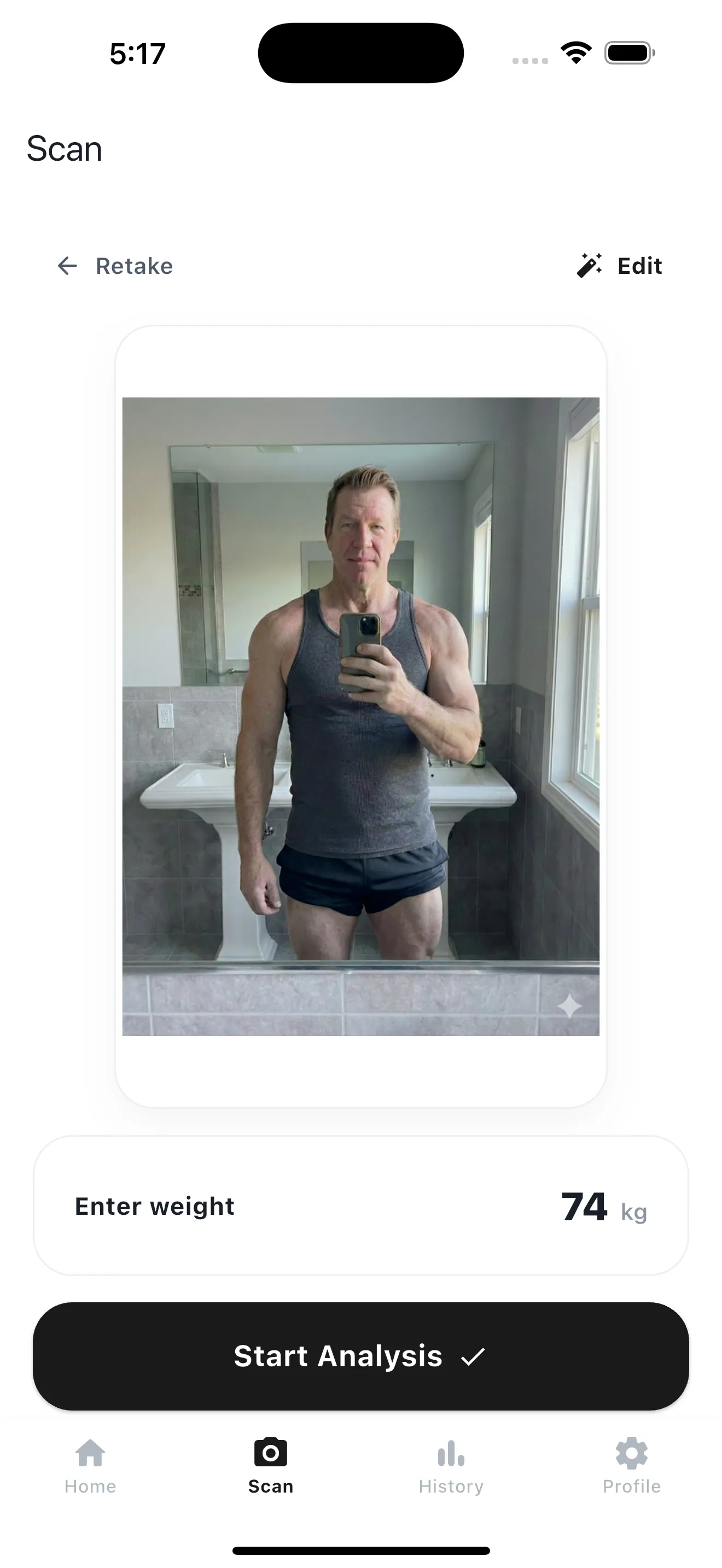 What matters isn't the numbers themselves — it's what you decide because of them.
Common Mistakes
Reacting to a single day's numbers. Drawing conclusions from the weight line alone. Logging without reviewing. Changing multiple variables at once. Cut these out and your experience with the app changes dramatically.
What Long-Term Users Have in Common
They don't break the logging streak, even on busy weeks. They treat off days as data, not failure. They choose immediate comeback over a perfect Monday restart. In the end, consistency comes from design, not willpower.
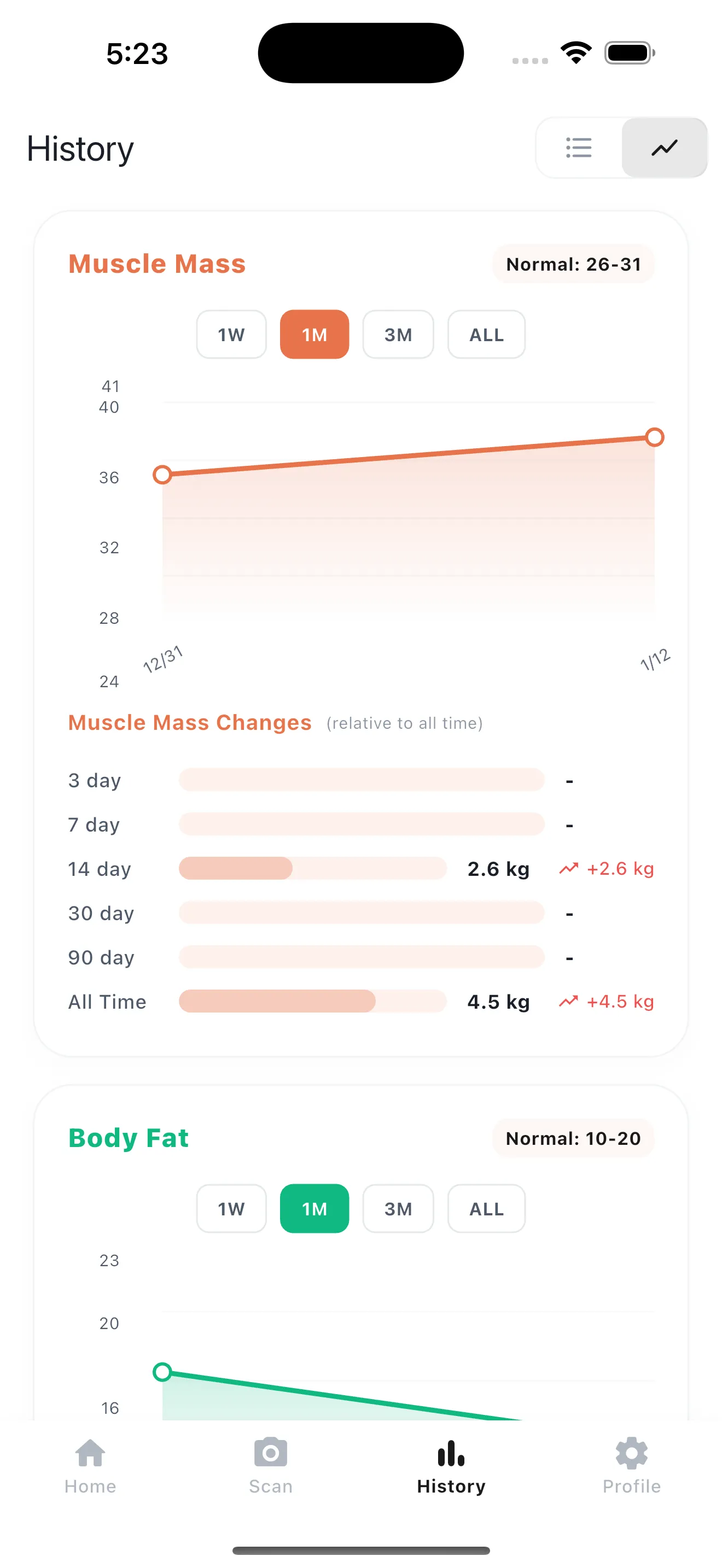 A good app doesn't push you to try harder — it keeps you from wavering.
In Summary
If you see Kodebody as just a diet app, you're only seeing half the picture. Its real job is reducing decision fatigue so your routine actually lasts.
Once you build the habit of looking at last month's direction instead of today's numbers, dieting gets a lot less stressful.
- Try the app: Kodebody