다이어트 좀 하다 보면 이상한 순간이 옵니다. 체중은 줄었는데 몸이 마음에 안 들거나, 체중은 그대로인데 라인이 좋아진다거나. 이때 진짜 궁금해지는 게 "내가 지금 잘하고 있는 거 맞아?"잖아요.
Kodebody는 그 질문에 답하려고 만든 도구입니다. 완벽한 한 번의 측정이 아니라, 매주 덜 흔들리는 판단을 돕는 게 핵심이거든요.
이 앱이 풀려는 문제
대부분의 다이어트 실패는 정보 부족이 아니라 판단 피로에서 나오더라고요.
체중 하나에 기분이 좌우되고, 수치가 출렁이면 계획을 과하게 수정하고, 기록은 하는데 행동으로 연결이 안 되고. Kodebody는 체중, 체지방률, 근육량을 같은 흐름으로 보게 해서 이런 오해를 줄입니다. 한 줄 숫자보다 조합과 추세를 보게 만드는 거죠.
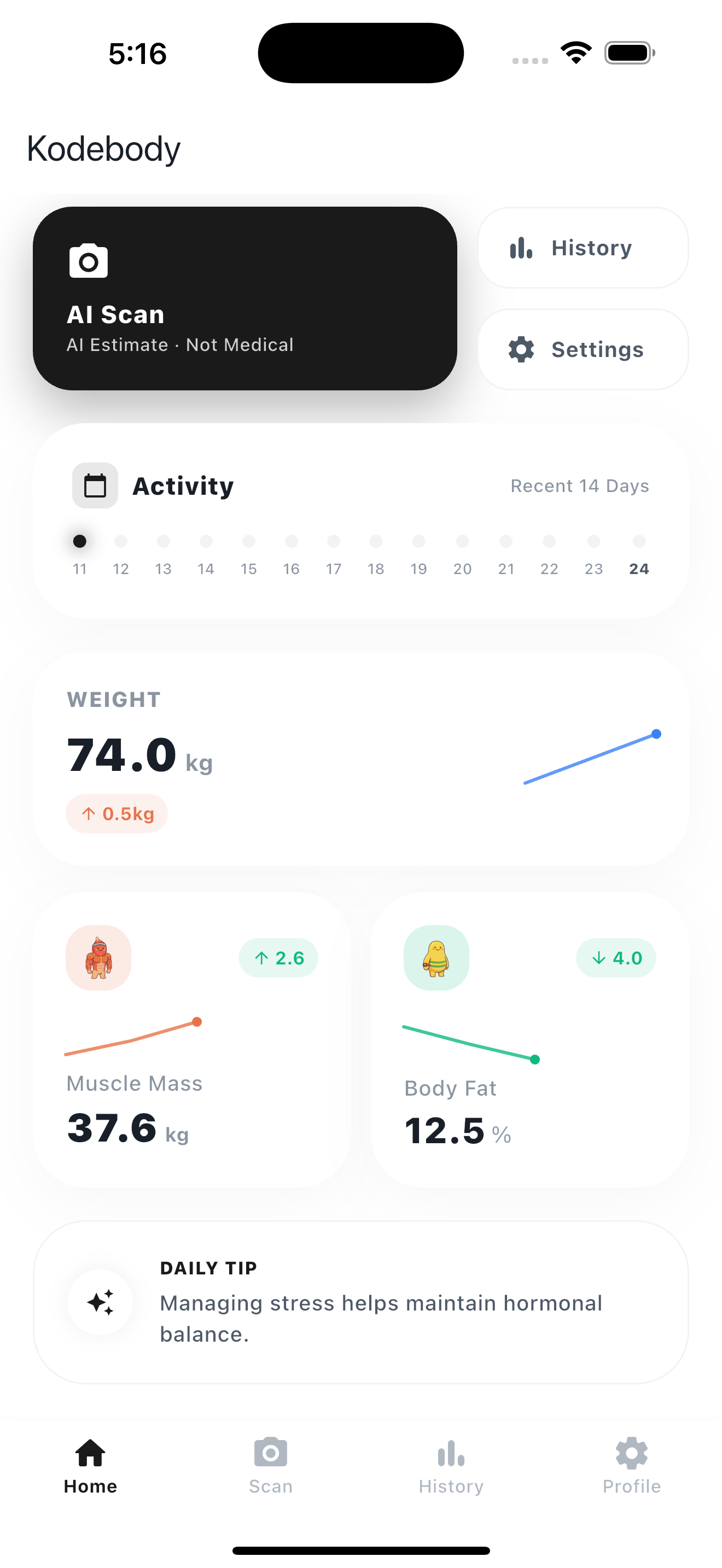 기능 개수보다 반복 가능한 사용 흐름이 중요합니다.
이런 분한테 잘 맞습니다
인바디를 자주 못 하는 분, 체중 숫자에 멘탈이 크게 흔들리는 분, 복잡한 기록 앱을 오래 못 쓰는 분, 다이어트를 이벤트가 아니라 습관으로 바꾸고 싶은 분. 이 중 하나라도 해당되면 Kodebody의 강점이 크게 느껴질 겁니다.
자주 오해하는 것들
"AI니까 무조건 정확하다" — 아닙니다. Kodebody는 의료 진단 도구가 아니거든요. 절대값을 맹신하면 오히려 판단이 흐려집니다.
"그럼 의미 없는 거 아냐?" — 의미는 절대값이 아니라 추세에서 나옵니다. 같은 조건으로 반복 측정하면, 데이터는 충분히 쓸모 있는 의사결정 재료가 됩니다.
첫 14일은 이렇게 해보세요
처음부터 완벽하게 하려 하면 오래 못 갑니다. 이것만 지키면 됩니다.
- 주 2~3회만 측정
- 시간/조명/거리 조건 최대한 고정
- 주말에 10분 리뷰
- 다음 주 변경사항 1개만 선택
이 14일 루틴만 지켜도 "무작정 하기"에서 "근거 있게 조정하기"로 전환됩니다.
인바디랑 같이 쓰면 더 좋습니다
둘은 경쟁이 아니라 분업 관계입니다. 인바디는 월간 기준점 점검, Kodebody는 주간 운전 데이터. 인바디 결과는 좋은데 그 사이 3~4주 운영이 흐려지는 분들 많잖아요. Kodebody는 바로 그 공백을 메우는 데 강합니다.
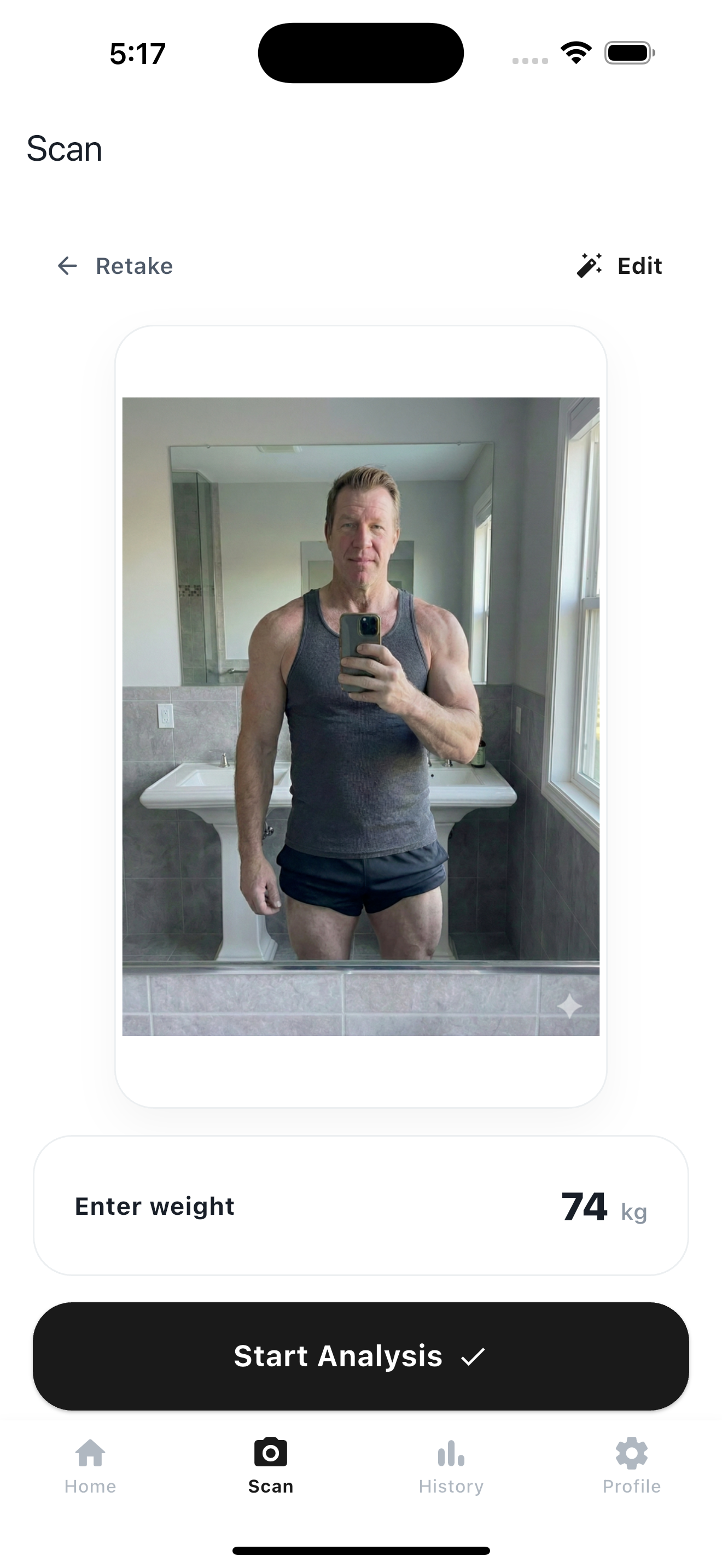 숫자 자체보다 숫자로 무엇을 결정하느냐가 중요합니다.
흔한 실수들
하루 수치에 바로 반응하기, 체중선만 보고 결론 내리기, 기록만 하고 리뷰 안 하기, 여러 변수를 한꺼번에 바꾸기. 이것만 줄여도 앱 사용 체감이 크게 달라집니다.
오래 쓰는 사람들의 공통점
바쁜 주에도 기록을 끊지 않습니다. 이탈한 날을 실패가 아니라 데이터로 봅니다. 월요일 완벽 시작보다 즉시 복귀를 택합니다. 결국 지속성은 의지보다 설계에서 나오더라고요.
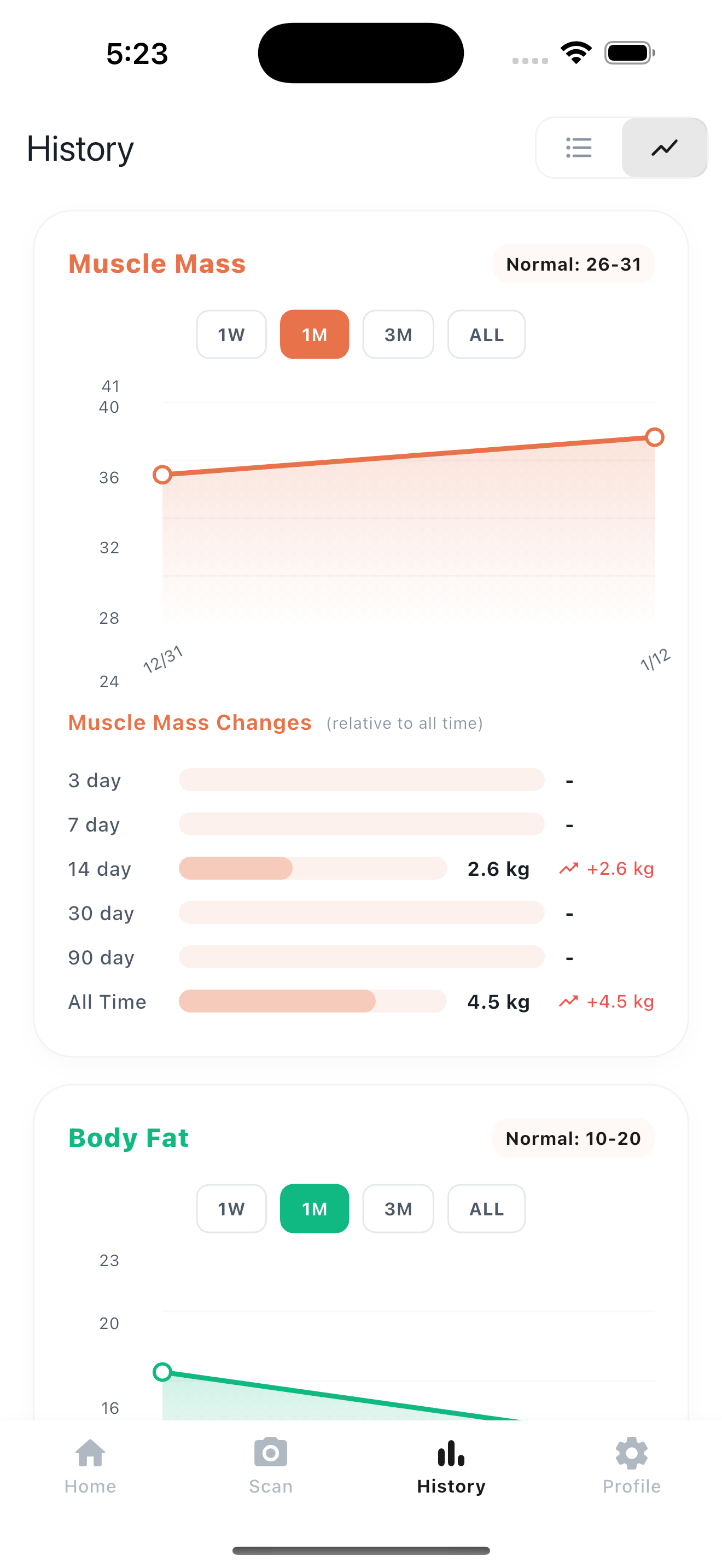 좋은 앱은 더 열심히 하게 만드는 게 아니라, 덜 흔들리게 만듭니다.
정리하면
Kodebody를 다이어트 앱으로만 보면 절반만 본 겁니다. 판단 피로를 줄여서 루틴을 오래 가게 만드는 게 이 앱의 진짜 역할이거든요.
오늘 수치가 아니라 지난달 방향을 보는 습관이 생기면, 다이어트가 훨씬 덜 불안해집니다.
- 앱 보기: Kodebody
- 관련 글: 인바디 vs AI 체성분 분석
- 관련 글: Kodebody 히스토리 그래프 읽는 법
- 관련 글: 다이어트 멘탈 안 흔들리는 기록법