Most plateaus are diagnosis problems before they are discipline problems.
If you only watch scale weight, you will call a plateau too early or react too aggressively. In many cases, body composition is still improving while scale weight looks flat.
Plateau diagnosis checklist
Run these checks in order:
- measurement quality consistency
- body fat trend over 2-4 weeks
- muscle trend stability
- sleep/fatigue status
- daily movement baseline
- nutrition adherence pattern
This sequence helps you avoid panic edits.
A "not actually stalled" pattern
- scale weight flat
- body fat trending down slowly
- muscle stable or slightly up
That is often recomposition, not failure.
Signs of a real plateau
- no meaningful fat or muscle improvement for 2-3+ weeks
- rising fatigue and adherence breakdown
- high graph noise from inconsistent logging conditions
Even then, change one variable at a time.
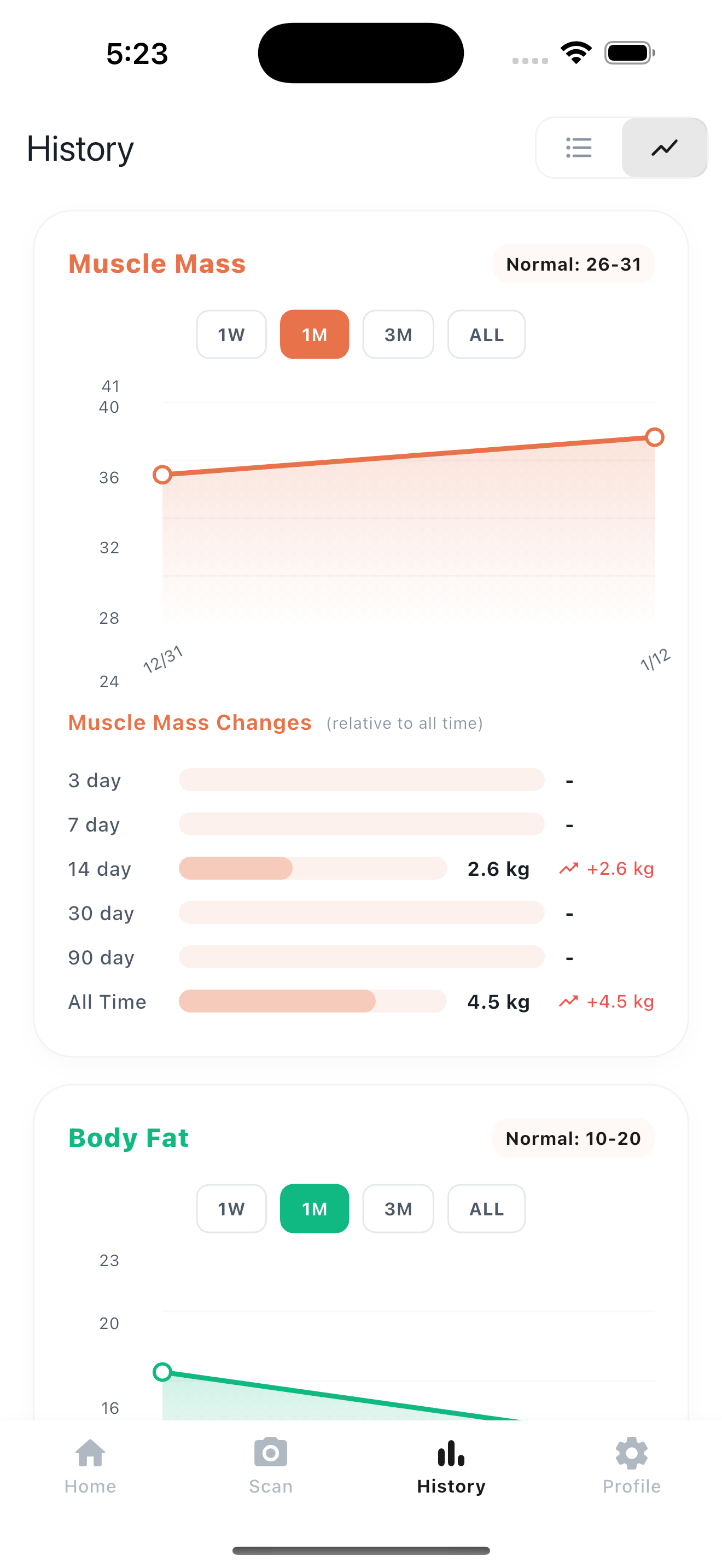 Plateau decisions are more reliable on monthly slope, not daily snapshots.
7-day reset protocol
- standardize capture conditions
- log 3 times during the week
- add recovery margin (sleep opportunity)
- increase daily movement modestly
- improve protein consistency
After 7 days, reassess trend direction before making larger changes.
Common plateau mistakes
- aggressive cardio increase as first move
- simultaneous edits to diet, training, and sleep
- using one bad day as proof of failure
Controlled adjustments beat dramatic overhauls.
False-plateau checklist
Before calling it a true stall, verify:
- are logging conditions comparable week to week?
- has sleep quality dropped recently?
- has daily movement silently decreased?
- are weekend adherence gaps widening?
If yes, treat it as a systems issue first, not a metabolism mystery.
14-day action card
- Days 1-3: stabilize measurements
- Days 4-7: restore recovery and baseline movement
- Days 8-14: adjust one nutrition lever if needed
Then re-check monthly slope direction before additional edits.
Bottom line
Plateaus are rarely solved by intensity panic.
They are solved by cleaner data, better sequencing, and one controlled adjustment at a time.
- Product page: Kodebody
- Related read: How to Read Kodebody History Graphs
- Related read: 15-Minute Weekend Check-In Routine