Sleep is often treated as a secondary variable in fat-loss plans. In practice, it is one of the primary stability variables.
When sleep quality drops, appetite control, training quality, and day-to-day decision quality usually drop with it. That is why many "mystery plateaus" are actually recovery problems in disguise.
Why sleep changes body-composition outcomes
Sleep affects:
- appetite regulation
- recovery capacity
- movement behavior
- adherence quality
So even with a reasonable plan, poor sleep can flatten fat trend and destabilize muscle retention.
A practical weekly sleep-trend approach
Keep it simple:
- log body composition 2-3 times/week
- add brief sleep-quality context notes
- review trend direction weekly
You are looking for pattern relationships, not one-night explanations.
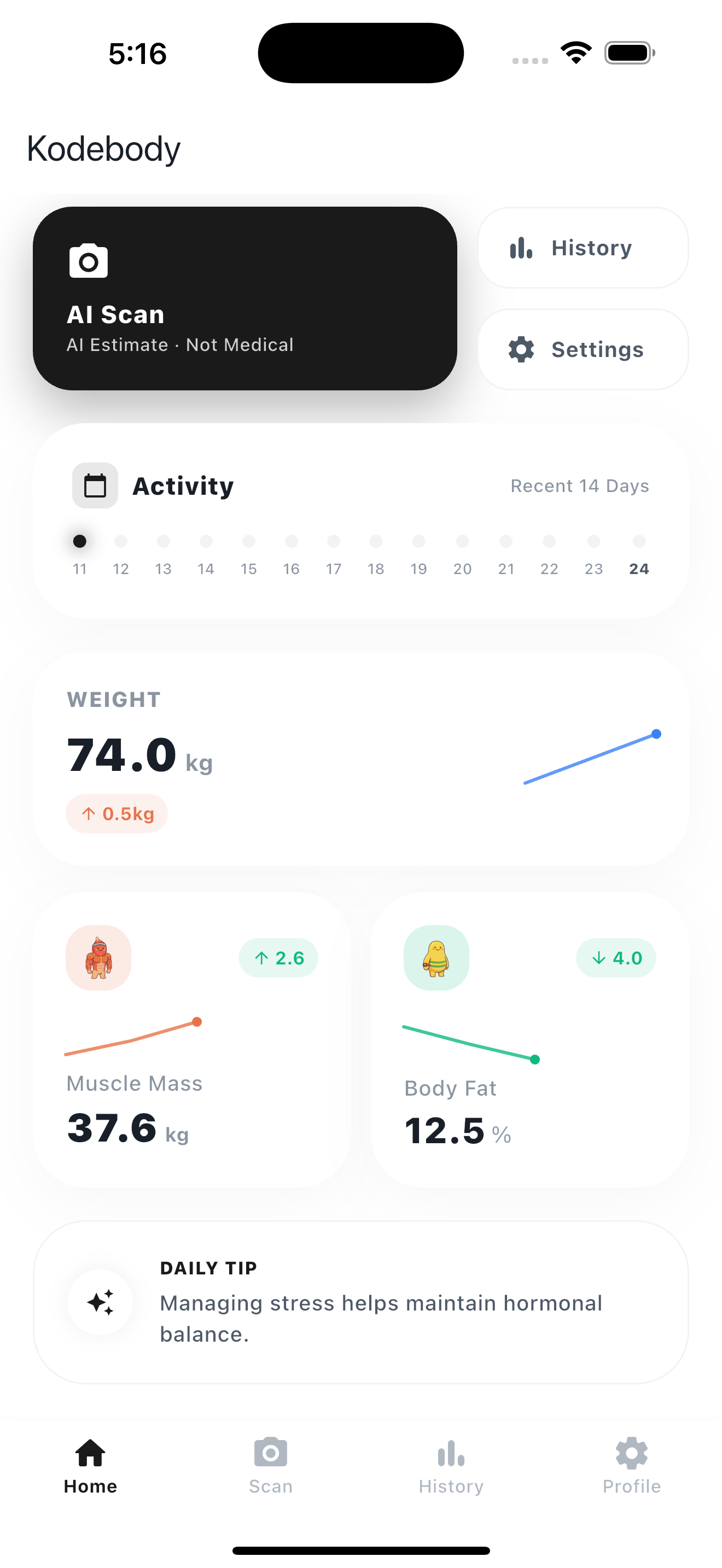 Recovery context often explains trend behavior better than scale-only logic.
What to do when sleep degrades
- keep training frequency, reduce session aggression if needed
- avoid panic calorie cuts
- stabilize wake time before complex sleep hacks
- reassess trend after a short reset window
This prevents recovery collapse from turning into full-plan collapse.
Bottom line
If sleep quality is unstable, body-composition interpretation will usually be unstable too.
Treat sleep as an operational input, not a lifestyle bonus. Stable sleep rhythm often improves fat-loss consistency and decision quality more than aggressive plan edits.
- Product page: Kodebody
- Related read: Stress Management for Fat Loss
- Related read: Weight-Loss Plateau Checklist
- Related read: Body Fat and Muscle Tracking Strategy