Most progress photos fail for one reason: comparison conditions keep changing.
When lighting, camera distance, angle, and posture shift every session, you are not comparing body change. You are comparing photography conditions.
What makes progress photos useful
A useful photo is not the most flattering one. It is the most repeatable one.
Standardize these variables:
- time of day
- lighting direction/intensity
- camera height and distance
- clothing and posture
Consistency makes trend interpretation possible.
Practical capture protocol
- take front/side/back in one session
- use neutral posture (minimal flexing)
- keep fixed camera position markers if possible
- save all shots from the same protocol (do not cherry-pick only flattering images)
Done right, photos become data, not mood checks.
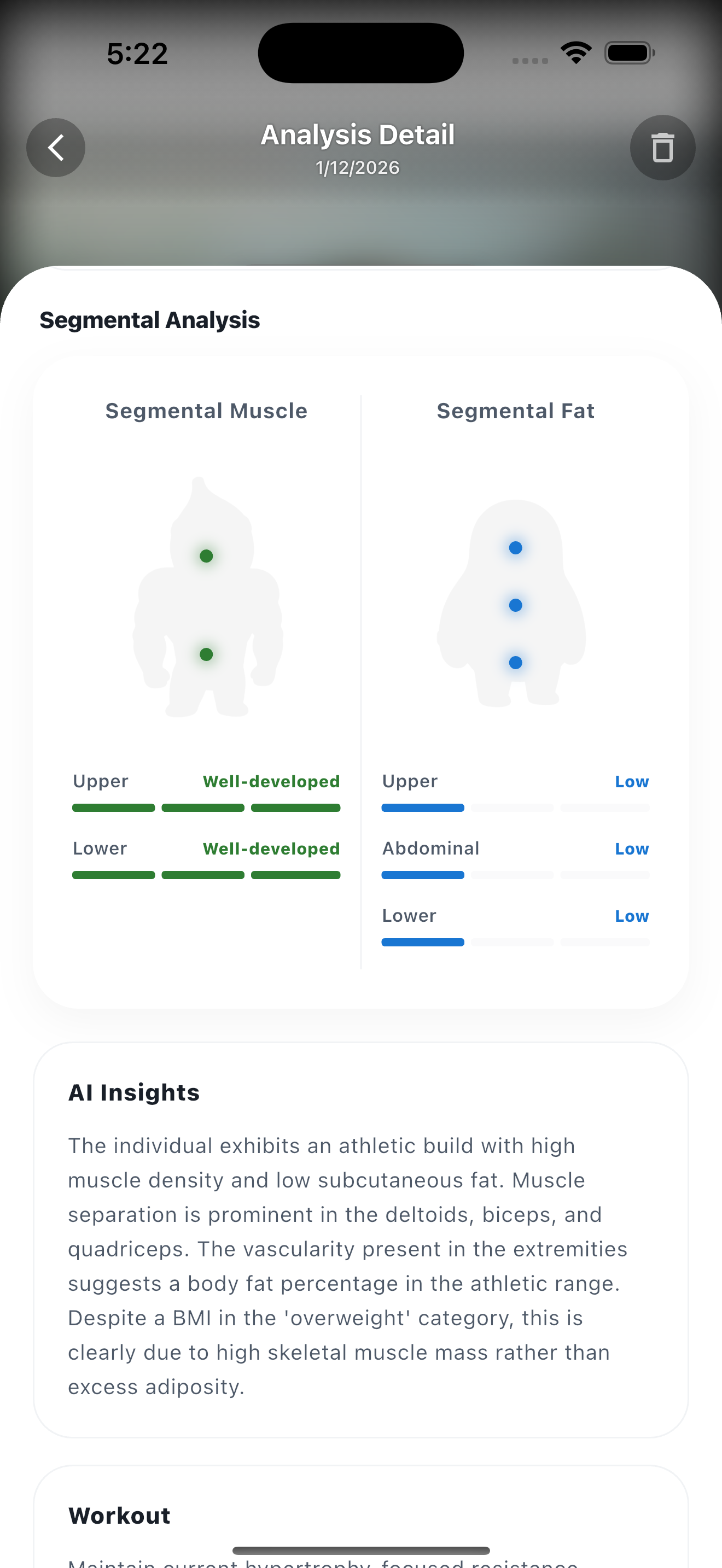 Standardized capture rules turn photos into decision-grade tracking data.
How often to take photos
Daily photos are often unnecessary and mentally noisy.
For most people:
- 2-3 sessions per week is enough
- evaluate changes on 2-4 week windows
Frequency matters less than consistency.
Photo + composition data is stronger than either alone
- photos show visual shape and posture changes
- body composition metrics show directional trend
When both align, decision confidence improves significantly.
Common failure patterns
- changing light/background every time
- using different poses for each session
- skipping logs after "bad-looking" photos
- relying on visual impression without metric context
A 2-week setup sprint
If your photo tracking has been inconsistent, run this reset:
- Pick one fixed location and camera height
- Capture at the same time window for 2 weeks
- Use the same clothing and neutral stance
- Pair each session with composition logs
After 2 weeks, comparison quality usually improves enough to support clearer decisions.
Interpretation examples
- Photos look tighter, scale flat, body fat down: likely strong progress
- Photos unchanged, body fat flat, training adherence low: execution issue first
- Photos worse after poor sleep week, then normalize: likely short-term noise
Use examples like these to avoid overreacting to one session.
Bottom line
Progress photos are powerful when standardized.
If you treat them as repeatable measurements instead of vanity snapshots, they become one of the best tools for body composition tracking.
- Product page: Kodebody
- Related read: 15-Minute Weekend Check-In Routine
- Related read: Body Fat and Muscle Tracking Strategy